Quick answer
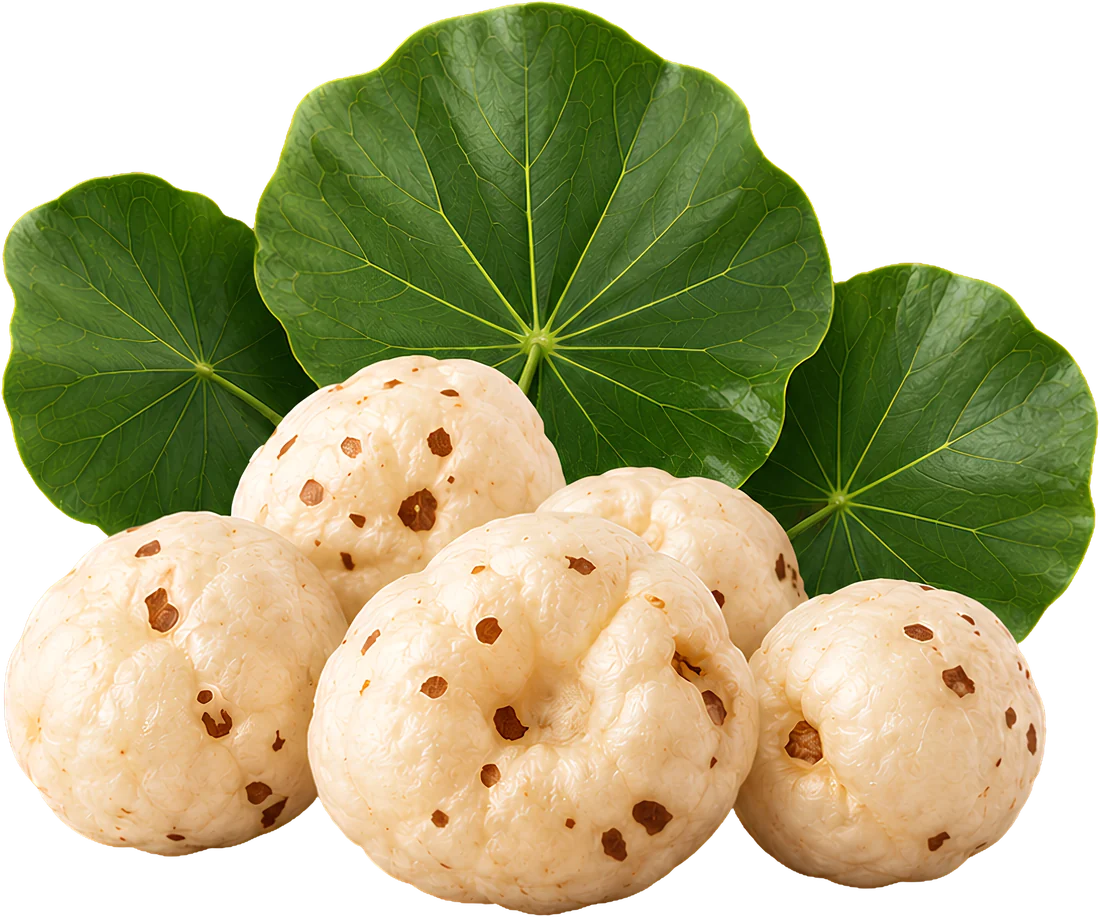
Makhana, commonly known as fox nuts, is the edible seed of Euryale ferox, an aquatic plant grown in ponds and wetlands in parts of Asia, including India. The seeds are harvested, dried, roasted and popped to produce the light, white makhana sold as raw makhana, which can then be roasted and seasoned at home.
Makhana in one sentence
Makhana is the popped seed of Euryale ferox, a flowering water plant with large, round, floating leaves. In English it is most often called fox nut, and you may also hear it described as gorgon nut. In everyday Indian usage it is sometimes called a “lotus seed”, although Euryale ferox is a different plant from the lotus.
Where does makhana come from?
Euryale ferox grows in still, shallow fresh water such as ponds and wetlands. In India, makhana is most closely associated with Bihar — particularly the Mithila region in the north of the state, where cultivating and processing makhana is a long-standing tradition.
“Mithila Makhana” is registered as a Geographical Indication (GI) in India, recognising the region’s identity with the product. Swadesh Makhana is based in Purnia, Bihar, part of this makhana-growing belt.
How makhana is harvested and processed
The plant’s seeds mature underwater and are gathered from the pond bed. Traditionally, the seeds are then cleaned, dried and graded before being roasted. The hard outer shell is cracked to release the kernel, which puffs into the familiar light, white makhana.
Methods vary between processors and regions, and each step affects the size, appearance and consistency of the final product. At Swadesh Makhana we oversee the journey from raw material to finished makhana, with attention to selection, handling and preparation for packaging.
Raw makhana vs roasted makhana
Raw makhana is the popped seed as it comes from processing — plain, unseasoned and ready to be prepared at home. Roasted makhana has been roasted again, usually with a little ghee or oil, and is often seasoned.
Our current range is raw makhana. You can roast it in a pan with a little ghee or oil and season it with salt, spices or herbs to your taste; cooking time varies with quantity and method.
What do makhana size grades mean?
In the trade, makhana is commonly sorted by size into grades. A higher grade number generally indicates a larger popped seed, and a “+” indicates the upper end of that size band.
Swadesh Premium Raw Makhana contains only 5+ and 6+ size grades, for customers who prefer larger makhana. Swadesh Authentic Raw Makhana contains a mix of size grades from 4 to 6 in the same pack. For bulk buyers, our grade range includes 4+, 5, 5+, 6, 6+ and 7, subject to availability.
How to store makhana
Store raw makhana in a clean, dry, airtight container in a cool place, away from moisture, direct sunlight and strong odours. After opening, reseal the pack tightly or transfer the makhana to an airtight container, and follow the storage instructions printed on the packaging.
What to check before buying makhana
- The size grade, so you know whether you are buying larger seeds or a mix of sizes.
- Pack size, and whether the product is raw or already roasted and seasoned.
- The ingredients list and storage instructions on the label.
- Food business licence details (such as an FSSAI number) and the manufacturer’s information.
Frequently asked questions
Not botanically. Makhana comes from Euryale ferox, which is a different plant from the lotus (Nelumbo nucifera), although makhana is sometimes called “lotus seed” in everyday use.
Our current range features raw makhana. It can be roasted or prepared at home according to your preferred recipe.
Choose Premium Raw Makhana if you prefer larger 5+ and 6+ grades, or Authentic Raw Makhana if you are comfortable with a mix of grades 4–6. Both come in 100g and 250g packs.
References
This article is for general information. It is not a substitute for professional medical or dietary advice.